Jiangsu BOS Hydraulic Technology Co., Ltd
EN
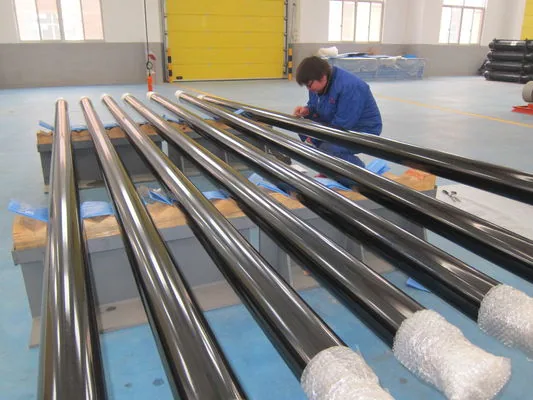
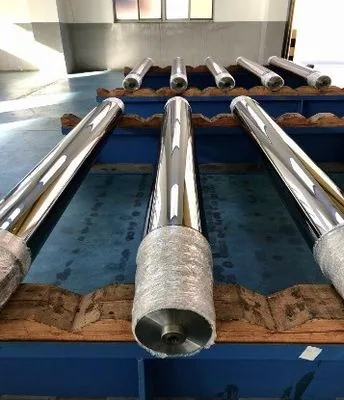
Anti-Corrosion Ceramic Coated Piston Rod

Anti-Corrosion Ceramic Coated Piston Rod

Anti-Corrosion Ceramic Coated Piston Rod is a sprayed coating job, not a cylinder build. The layer is applied to the piston rod, roll or wear part where hard chrome alone starts to score, pit or crack under load. Jiangsu BOS Hydraulic Technology Co., Ltd sprays, grinds and inspects the coating in house, so the substrate preparation, the spray parameters and the final surface finish stay under one drawing.

This specification covers coating system Inc625-Cr2O3TiO2, bond strength > 40 MPa, hardness 65 HRC. The coating is ground after spraying: Ra 0.15 to 0.4 μm and Rz below 4.5 μm are the normal finish for rod sealing, and a rougher profile is left where the surface has to hold oil.

Which system is used depends on the duty. Tungsten carbide grades resist abrasion and particle erosion, Cr2O3-TiO2 ceramics resist corrosion and hold up in salt fog, and Ni-based bond layers are sprayed first where the substrate needs a bond coat. Test coupons go with each batch for bond strength (ASTM-C633), impact (ASTM D2794-93) and surface roughness (NEN-ISO 4287).

Key Features

  • Coating system: Inc625-Cr2O3TiO2
  • Bond strength: > 40 MPa
  • Macro hardness: 65 HRC
  • Sprayed, ground and inspected in house to the rod drawing

Substrate preparation decides the result: the rod is degreased, grit blasted and pre-heated before spraying, and the bond layer is kept under the interval between blast and spray.

Specifications

Typical Coating CompositionInc625-Cr2O3TiO2
Bond Strength> 40 MPa
Macro Hardness65 HRC
PowerHydraulic
Minimum Order Quantity1 piece
Delivery Time15 to 60 days after drawing confirmed
Payment TermsT/T
PortShanghai, China
Place of OriginChangzhou, Jiangsu, China
Coating ProcessHVOF / flame spray, ground after spraying
Coating Thickness150 μm and above, to drawing
Material CertificateEN 10204 3.1 on request

Coating Systems We Spray

System choice follows the failure mode on site, not the price per square metre. Abrasion and particle erosion call for tungsten carbide; chloride and salt fog call for a ceramic; a nickel bond layer goes under either where the substrate needs it.

SystemProcessThicknessHardnessBond strengthDuty
Tungsten carbide (WC-Co-Cr)HVOF150 to 400 μm65 to 72 HRCover 70 MPaAbrasion, particle erosion
Chromium oxide (Cr2O3-TiO2)HVOF or flame150 to 350 μm1,000 to 1,200 HVover 40 MPaCorrosion, salt fog, sealing surfaces
Nickel-chromium bond layerHVOF50 to 120 μm—over 40 MPaBond coat under ceramic or carbide
Hard chrome (for comparison)Plating20 to 100 μmabout 65 HRC—General rod duty, dry environment

Bond strength is measured on coupons sprayed in the same batch to ASTM-C633; surface roughness is checked to NEN-ISO 4287. Chrome plated parts are stripped before spraying, because a sprayed layer will not bond to plating.

Materials and Finish

Substrate: carbon steel, alloy steel, stainless or cast iron. Surface is degreased, grit blasted and pre-heated before spraying, and the bond layer is kept inside the interval between blast and spray.

After spraying the layer is ground or lapped to the drawing: Ra 0.15 to 0.4 μm and Rz below 4.5 μm for rod sealing, a rougher profile where the surface has to hold oil.

Applications

Anti-Corrosion Ceramic Coated Piston Rod is specified where a plated rod is not holding up: hydropower gate and hoist rods, marine and offshore cylinder rods, ship steering and hatch cover rods, paper machine dryer rolls, pump shafts and wear plates on mining equipment.

Coatings are applied to finished or semi-finished parts. Where the part is already chrome plated, the chrome is stripped first, because a sprayed layer will not bond to a plated surface.

Ordering and Delivery

Send the part drawing, substrate material, hardness, the environment it runs in and the surface finish the seal needs. We confirm which spray system fits, then blast, spray, grind and inspect, with test coupons from the same batch.

FAQ

Why use a sprayed coating instead of hard chrome?

A sprayed tungsten carbide or ceramic layer is denser in wear terms than a plating and carries oxides that hold up in corrosion. It also avoids the hexavalent chromium bath, which matters where the plant has to meet REACH or similar rules.

How thick is the coating and how much has to be left for grinding?

Coating thickness starts at 150 μm on the bond layer. Enough is sprayed so that after grinding the finished layer still meets the drawing, typically 80 to 150 μm of ceramic or carbide above the bond coat.

How is the bond strength verified?

On test coupons sprayed in the same batch, to ASTM-C633. Bond strength above 40 MPa is the normal figure for the tungsten carbide and Cr2O3-TiO2 systems we run; the coupon result goes with the inspection record.

What length of rod can you coat?

Rods up to 16 m are handled on the horizontal spray and grind line. Longer parts are quoted after a review of the handling and the runout the drawing allows.

What is the minimum quantity and lead time?

One piece is accepted. Lead time is normally 15 to 60 days after the drawing is confirmed, longer where the part needs chrome stripping or a special substrate preparation.

Online Message
Thank you for your interest in BOS Hydraulic, please leave us a message or call us.
Feb 26
2026
Hydraulic cylinders are essential components in fluid power systems, converting hydraulic energy into linear mechanical motion. Whether in construction equipment, industrial machinery, agricultural sy...
View More +

Difference Between Single-Acting and Double-Acting Hydraulic Cylinders
Feb 19
2026
Hydraulic cylinders are essential components in modern industrial systems, converting fluid power into controlled linear motion. In high-pressure applications, such as heavy construction equipment, in...
View More +
Choosing the Right Hydraulic Cylinder for High-Pressure Applications